
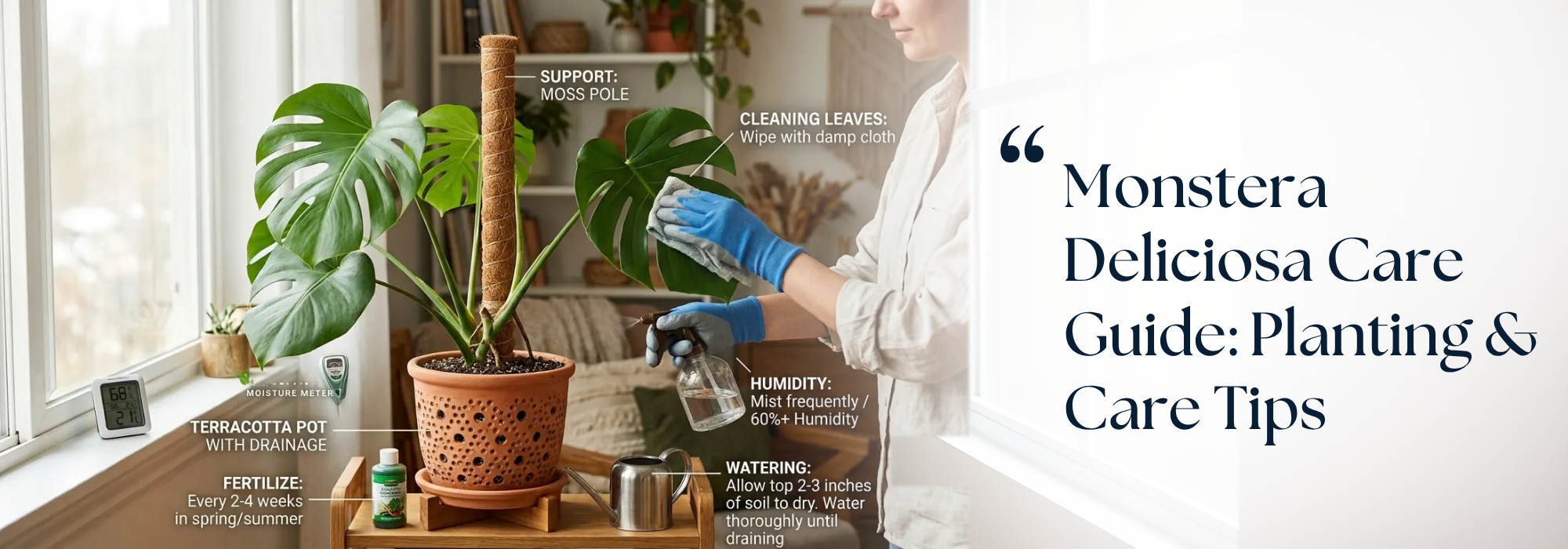
It is the plant almost every customer asks about first: the Monstera deliciosa, with its huge glossy leaves and dramatic splits. This guide covers everything you need to know about Monstera deliciosa plant care, from choosing the right pot and soil to watering, feeding, and encouraging new leaves. If you are growing a Monstera in a Dubai or Sharjah home, these practical tips will help your Swiss cheese plant stay healthy and thrive in UAE indoor conditions, not just inside our plant shop in Sharjah.
Quick Diagnosis
Brown leaf edges: Air is too dry, or the AC is blowing directly on the plant.
Yellow leaves: Usually overwatering.
Leaves getting burnt: Too much direct sunlight.
Small leaves: Not enough light.
No leaf splits: Plant may need more light or may be young.
Drooping leaves: Check whether the soil is too dry or too wet.
Crispy leaves: Low humidity, especially near AC.
What Makes Monstera Deliciosa Special?
The Swiss cheese plant, named for the holes that develop in mature leaves, is native to the tropical forests of southern Mexico down to Panama. In its natural habitat, Monstera deliciosa is a climbing tropical plant that can grow very large. Indoors, its final size depends on light, support, pot size, and growing conditions, but it can still become a substantial houseplant.
Young plants have solid, heart-shaped leaves. The famous splits and holes, called fenestrations, appear as the plant matures and receives more light. That is why two monsteras of different ages can look like completely different plants. It belongs to the arum family (Araceae) and grows as a hemiepiphyte, sending out aerial roots that grip whatever it climbs.
Monstera grows well indoors when it receives bright, indirect light and consistent care. If you are looking for other plants that can handle Dubai’s warm conditions, you can also explore Best Plants for Dubai Weather: Heat-Tolerant Plants for Homes for more suitable plant options.
Indoor Plants: Monstera Deliciosa Planting & Care Tips at a Glance
Here is the short version you can pin to the fridge:
- Light: bright, indirect light, never harsh afternoon sun
- Humidity: Moderate to high humidity is ideal; use a humidifier or group plants together if AC makes the air very dry.
- Soil: Chunky, airy, and well-draining
- Water: Water when the top 2–3 inches of soil have dried, adjusting for pot size and conditions.
- Feed: balanced liquid fertiliser, monthly in spring and summer
- Repot: every 18–24 months, one pot size up
- Propagate: stem cutting with at least one node
Planting and Potting Your Monstera
Start with a pot that has drainage holes; standing water is the fastest way to kill this plant. Use a chunky aroid mix: coco coir or peat, perlite, and bark. It keeps oxygen around the roots while holding enough moisture.
Plant at the same depth it sat in its nursery pot, then water thoroughly until it runs out of the bottom. Empty the saucer afterwards. The Clemson University extension warns that overwatering is the main cause of death of potted plants: roots need both water and oxygen, and soggy soil starves them. Add a moss pole or small trellis now. Monstera is a climber, and its aerial roots will happily grip the pole, giving you bigger leaves and a tidier shape as it grows.
Light, Water and Humidity in UAE Homes
UAE sunlight is intense, and direct afternoon sun scorches Monstera leaves, leaving brown patches. Place your Monstera in bright, indirect light near a bright window. Protect it from intense direct afternoon sunlight, particularly during the hotter months in the UAE. If your only spot is a sun-filled balcony, the leaves will tell you quickly. Watering is where most plant parents go wrong. Use the finger test: stick a finger into the soil up to the first joint, and check the top 2–3 inches of soil before watering. If it feels dry, water thoroughly until excess water drains from the bottom of the pot. Avoid keeping the soil constantly wet, especially in air-conditioned rooms where growth may be slower. Always water thoroughly and let the pot drain.
Air conditioning dries out the air, and monstera prefers humidity. Raise it with a pebble tray under the pot, regular misting, or by grouping plants. For sunny balconies and tougher spots, see our guide to the best heat-tolerant plants for Dubai homes.
Feeding and Repotting
Feed during the plant’s active growing period with a balanced liquid fertilizer diluted according to the product instructions. Reduce or stop feeding when growth slows significantly. Repot every 18–24 months, or when roots crowd the drainage holes. Move one pot size up with a fresh chunky mix. Spring is the best time; the plant recovers fastest while actively growing.
Common Problems: Yellow Leaves, Brown Edges and Pests
- Yellow leaves: usually mean overwatering. Check the soil before watering; let the top inches dry out fully.
- Brown, crispy edges: point to underwatering or very dry air. Water more consistently and raise humidity.
- Pests: Spider mites love hot, dry conditions, and fine webbing on the leaf undersides is the giveaway. Wipe leaves with a damp cloth and treat promptly.
For a fuller list of mistakes and how to avoid them, read our common mistakes when growing indoor plants in the UAE.
How to Propagate Monstera Deliciosa
Propagation is simple and gives you a second plant for free. Take a stem cutting with at least one node; an aerial root makes it even easier. Place it in water or a moist mix, keep it in bright indirect light, and take a healthy stem cutting containing at least one node. A leaf alone cannot produce a new Monstera plant. Place the cutting in water or a suitable propagation medium in bright, indirect light. Once a healthy root system has developed, transfer it to a well-draining potting mix.
Where to Find Monstera in the UAE
Looking for a Monstera deliciosa for your home or office? Maya’s World Plants & Flowers UAE in Muweilah, Sharjah offers indoor plants suitable for UAE growing conditions.
When choosing a Monstera, look for healthy green leaves, firm stems, and signs of new growth. Choose a pot with adequate drainage and select a chunky, well-draining potting mix to reduce the risk of root problems.
If you are new to indoor plant care, explore our guide to caring for indoor plants or our recommendations for the best indoor plants for beginners. You can also contact us for help choosing a plant, pot, and suitable care setup for your space.
FAQs
How often should I water a Monstera in Dubai?
There is no fixed watering schedule because indoor temperature, humidity, pot size, and soil type all affect how quickly the soil dries. Check the top 2–3 inches of soil with your finger. If it feels dry, water thoroughly until excess water drains from the bottom of the pot. Avoid watering while the soil is still consistently wet, as overwatering can lead to root problems.
Why are my Monstera leaves turning yellow?
Yellow Monstera leaves are often caused by overwatering, poor drainage, or soil that stays wet for too long. Check the soil before watering and make sure your pot has drainage holes. Older leaves can also turn yellow naturally as the plant grows. If several leaves are turning yellow at the same time, check the plant’s watering and drainage conditions.
Why doesn’t my Monstera have splits?
Young Monstera plants commonly produce solid, heart-shaped leaves. The characteristic splits and holes, known as fenestrations, usually develop as the plant matures. Providing bright, indirect light, proper watering, adequate nutrition, and climbing support can encourage healthy mature growth. However, young plants may naturally take time before producing fenestrated leaves.
Can Monstera grow in air conditioning?
Yes, Monstera can grow indoors in an air-conditioned home, but very dry air can cause brown or crispy leaf edges. Keep the plant away from direct AC airflow and place it in bright, indirect light. If the air is particularly dry, grouping plants or using a humidifier can help maintain more suitable humidity levels.
How much sunlight does a Monstera need indoors?
Monstera deliciosa grows best in bright, indirect light. Place it near a bright window where it receives plenty of filtered light, but protect it from intense direct afternoon sunlight, which can scorch the leaves. If the plant receives too little light, growth may become slower, and new leaves may remain smaller.
