
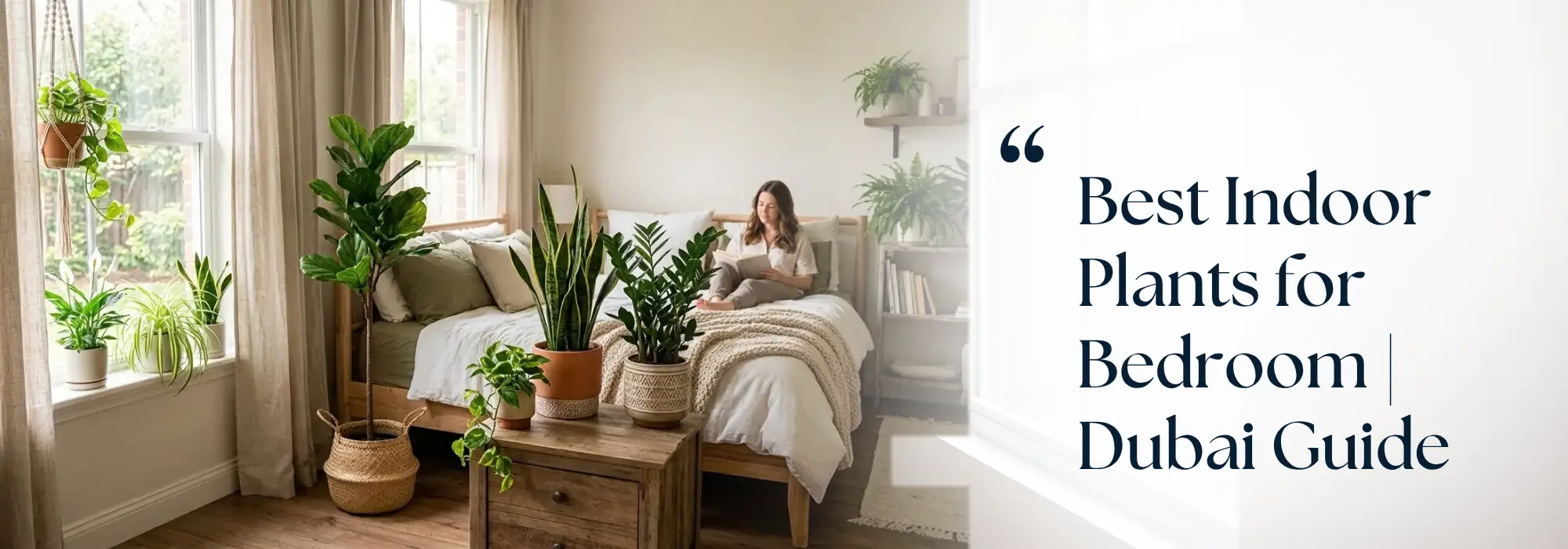
Choosing the best indoor plants for your bedroom depends on more than appearance. If you’re looking for indoor plants in Dubai, you also need to consider the amount of natural light, air conditioning, humidity, available space, and how often you can water the plant. Curtains may stay drawn, the air conditioning can make the room cold and dry, and nobody wants a watering schedule that requires daily attention. The right choice is a plant that tolerates low light, handles occasional missed watering, and does not shed leaves all over the room.
Quick Diagnosis
Choosing the right bedroom plant starts with understanding your room’s light, AC exposure, humidity, and watering conditions. For indoor plants in Dubai, snake plants and ZZ plants are suitable for low-light spaces, while peace lilies and spider plants work well when there is more indirect light and regular watering. Check your room conditions before choosing a plant to keep it healthy and easy to maintain.
Table of Contents
Start with the light your bedroom actually gets
Before you pick a species, spend a day noticing your window. A bedroom that faces a shaded courtyard is a low-light room, even if it feels bright to you at noon. A room with a sheer-curtained window facing the sun gets what nurseries call bright indirect light, the best conditions most indoor plants will ever see indoors.
Light decides everything else. A plant in too little light drinks less water, which means the same watering habit that worked in your living room will drown it in the bedroom. If your room is genuinely dim, our guide to low-light indoor plants narrows the shortlist for you. Also check out Best Plants for Dubai Weather: Heat-Tolerant Plants for Homes
Best Indoor Plants for a Bedroom
| Plant | Light Requirement | Watering | Bedroom Suitability | Best For |
| Snake Plant | Low to bright indirect light | Low | Excellent | Beginners and low-light bedrooms |
| ZZ Plant | Low to bright indirect light | Low | Excellent | Busy people and forgetful waterers |
| Spider Plant | Medium to bright indirect light | Moderate | Very Good | Shelves and hanging pots |
| Peace Lily | Low to medium indirect light | Moderate | Good | Bedrooms with some humidity |
Snake Plant: A Low-Maintenance Choice for Bedrooms
The snake plant earns its bedroom reputation for one reason: it survives neglect. Dracaena trifasciata uses crassulacean acid metabolism, opening its leaf pores at night instead of during the day to avoid losing water in the heat. This water-saving adaptation helps snake plants tolerate dry soil, though they still need occasional watering when the potting mix dries out.
It tolerates low light, holds its stiff upright shape in a narrow space beside a bed, and does not drop leaf litter. The one thing it will not forgive is overwatering, which rots the rhizome quickly. If you want the full case for it, read our dedicated piece on snake plant benefits.
Peace lily: the humidity-friendly pick
A peace lily is the opposite personality; it tells you when it is thirsty by drooping, then recovers within hours of a drink. Peace lilies naturally grow in shaded tropical environments, so they can tolerate lower indoor light. However, they still need some indirect light to remain healthy and produce flowers.
Choose it if you like a plant that flowers indoors and you do not mind checking the soil weekly. Keep it out of reach of pets and small children, as with most aroids.
Spider plant: the easiest one to keep alive
The spider plant is the one to buy if you have killed things before. It copes with irregular watering, puts out arching baby plantlets you can pot up for free, and looks good on a shelf or a hanging pot where the trailing growth has room. It prefers bright indirect light but will hold on in less. Brown leaf tips usually mean dry air or salty tap water, not disease.
ZZ plant: for the darkest corner you have
The ZZ plant stores water in thick underground rhizomes, so it handles both deep shade and long gaps between waterings. A ZZ plant can tolerate very low light, but a completely windowless room provides essentially no usable light for photosynthesis. Its glossy leaves also hide dust less well than you would think; wipe them every few weeks so the plant can photosynthesise.
Do indoor plants really improve bedroom air quality?
Laboratory research has shown that some houseplants can remove certain pollutants under controlled conditions. However, later research has questioned how meaningful this effect is in normal homes, where ventilation and air exchange have a much larger impact on indoor air quality.
What plants genuinely do for bedroom air quality is more modest and still worth having; they add a little humidity through transpiration, which helps in an air-conditioned room, and Many people also prefer the look and feel of greenery in bedrooms, although this should not be presented as a guaranteed sleep or health benefit.
Is it safe to sleep with plants in the room?
Yes. The idea that houseplants make a bedroom unsafe at night comes from the fact that plants respire in darkness, but the amount of carbon dioxide a few pots release is tiny next to what a sleeping person exhales.
Snake plants are an interesting case here, because their night-opening pores mean they exchange gases while you sleep. It is a nice detail, not a health claim.
How many plants should a bedroom have?
There is no fixed number of plants that works for every bedroom. For many rooms, two or three well-placed plants are enough to add greenery without making the space difficult to maintain.
Group plants with similar needs together so you can water them in one pass instead of remembering four different schedules.
Watering and placement in an air-conditioned room
Check the moisture level before watering rather than following a fixed calendar. For many houseplants, insert your finger about 2–3 cm into the potting mix. If the soil feels dry at that depth, check the plant’s specific watering requirements before watering thoroughly.
Keep pots out of the direct blast of an AC vent, which dries leaf edges and chills roots. Away from the cold draught, an air-conditioned UAE bedroom can provide a relatively stable indoor environment for many houseplants, provided the plants receive suitable light and are kept away from direct AC airflow. Far gentler than a balcony. If you are also planting where the sun does reach, our guide to the best heat-tolerant plants for Dubai homes covers the tougher species.
A simple way to choose
Match the plant to the room, not to a photo you liked. Dim room and forgetful watering: snake plant or ZZ plant. Reasonable light and a weekly routine: peace lily or spider plant. Then avoid the usual pitfalls listed in our round-up of common mistakes when growing indoor plants in the UAE, and follow the basics in our complete indoor plant care guide.
Looking for indoor plants for your bedroom in the UAE? Maya’s Plants can help you choose a variety based on your bedroom’s light, AC exposure, and available space. If you’re based in Sharjah, tell us about your room, and we’ll help you find a suitable option
