
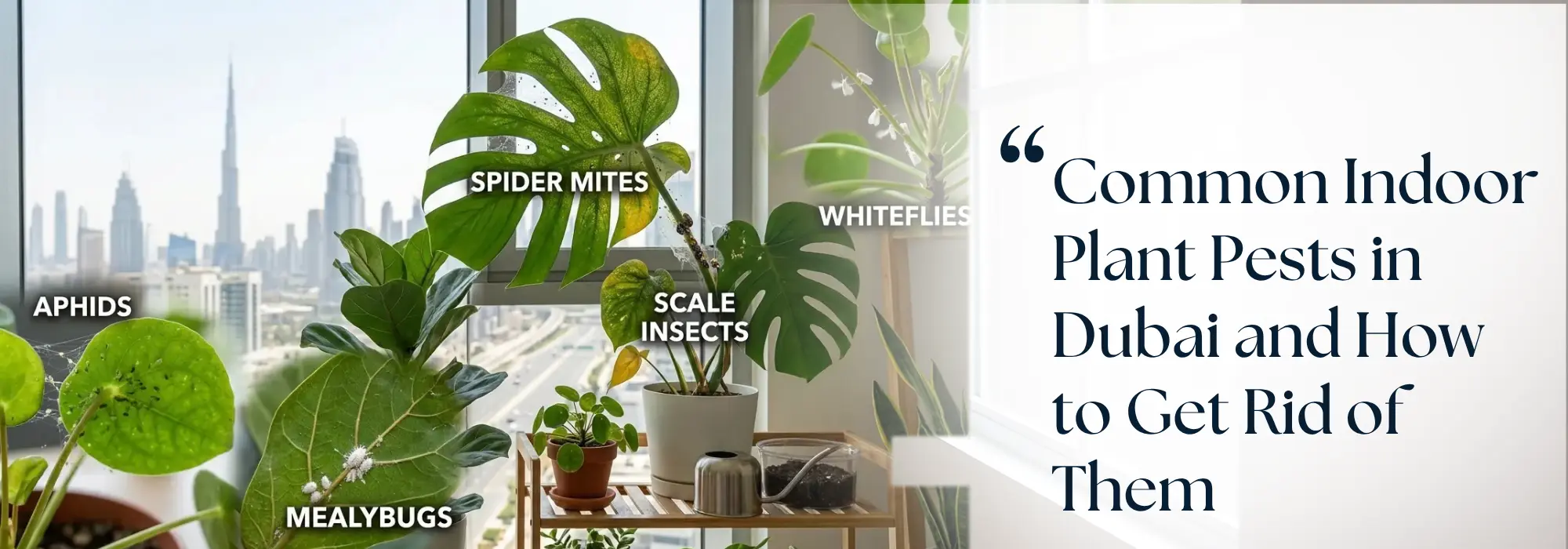
Common indoor plant pests in Dubai can appear even on well-maintained plants, and the local climate can create conditions that encourage certain pests. Air-conditioned indoor environments can dry out plants, which may favor pests such as spider mites. A new plant from a nursery, shop, or friend can also introduce pests into your collection. The good news is that most infestations are easy to treat when caught early. This guide covers the six pests you are most likely to find, the signs to look for, and the step-by-step indoor plant UAE routine that gets rid of them.
Quick Diagnosis
Fine webbing + tiny speckles on leaves → Possible spider mites
White cottony clusters → Possible mealybugs
Tiny flies around the soil → Possible fungus gnats
Brown or tan bumps on stems → Possible scale insects
Clusters on new growth → Possible aphids
Small white flies → Possible whiteflies
Table of Contents
How to get rid of common indoor Plant Pests in Dubai
Six common pests are frequently found on indoor plants in Dubai. Spider mites, mealybugs, fungus gnats, scale insects, aphids, and whiteflies. Aside from pests, another common issue is watering. Overwatering vs Underwatering: How to Identify and Save Your Plants to save your plant. . Each leaves a different trace, and each needs a slightly different treatment. Check the undersides of leaves and the soil surface weekly, because early signs are always easier to fix.
Common Indoor Plant Pests: Quick Identification Guide
| Pest | Common Signs | Where to Check | First Step |
| Spider mites | Fine webbing and tiny speckles on leaves | Undersides of leaves | Isolate the plant and wash the foliage |
| Mealybugs | White, cotton-like clusters | Stems and leaf joints | Remove visible insects |
| Fungus gnats | Tiny flies around the soil | Soil surface | Allow the growing medium to dry appropriately between watering |
| Scale insects | Brown or tan bumps | Stems and leaves | Gently remove visible scale |
| Aphids | Small clusters on new growth | New shoots and tender leaves | Wash the plant with a gentle stream of water |
| Whiteflies | Small white flies that scatter when disturbed | Undersides of leaves | Use sticky traps and an appropriate treatment |
- Spider Mites: The Number One Dubai Pest
Spider mites thrive in hot, dry, still air—in other words, conditions that can occur in air-conditioned Dubai apartments. They are tiny, so you rarely see the mites themselves. Instead, you notice fine webbing between stems, pale stippled dots on leaves, and a dusty look that does not wipe off.
Spider mites can reproduce quickly under favorable conditions, and repeated use of the same pesticide can contribute to resistance. If using pesticides, follow the product label and rotate active ingredients where appropriate.
Isolate the plant, rinse the foliage, raise the humidity around it, and treat the plant with insecticidal soap or another appropriate pest-control product according to the product label, and repeat treatment as directed.
- Mealybugs: The White Cottony Clumps
Mealybugs hide in leaf joints and along stems as small white cottony clusters. They suck sap, weaken the plant, and leave sticky honeydew that can attract ants. For small infestations, dab visible mealybugs with a cotton swab lightly moistened with rubbing alcohol. Then wash the plant and use an appropriate treatment according to the product label. Check every new arrival, since mealybugs travel easily on fresh plants.
- Fungus Gnats: The Flies Around Your Soil
If tiny flies buzz up from the pot whenever you water, you have fungus gnats. Their larvae thrive in consistently moist soil, so overwatering or allowing the growing medium to remain wet for too long can encourage infestations. Clemson University’s extension service notes that overwatering is the main cause of death of potted plants. Water thoroughly, then let the top of the soil dry before watering again. Yellow sticky traps catch the adults, and a layer of coarse sand or another suitable top-dressing may help make the soil surface less favorable for adult fungus gnats.
- Scale Insects: The Bumps on Stems
Scale insects often appear as small brown, tan, or amber bumps attached to stems and the undersides of leaves. Unlike mealybugs, they do not move once settled. Scrape them off gently with your thumb or a soft cloth, then use horticultural oil or another appropriate treatment according to the product label. Watch for new bumps for a month after treatment.
- Aphids: The Clusters on New Growth
Aphids gather in small green or black groups on tender new shoots, curling leaves and leaving sticky residue. A gentle but firm stream of water can dislodge many aphids from the plant. Follow with a mild soap spray for a week or two. They multiply quickly, so treat the moment you spot them.
- Whiteflies: The Moths That Fly Up When You Touch the Plant
Whiteflies are small white insects that scatter in a cloud when you brush the foliage. They feed on leaf undersides and weaken the plant over time. Sticky traps catch the adults, and Insecticidal soap or another appropriate treatment can help control the immature stages on the undersides of leaves when used according to the product label.
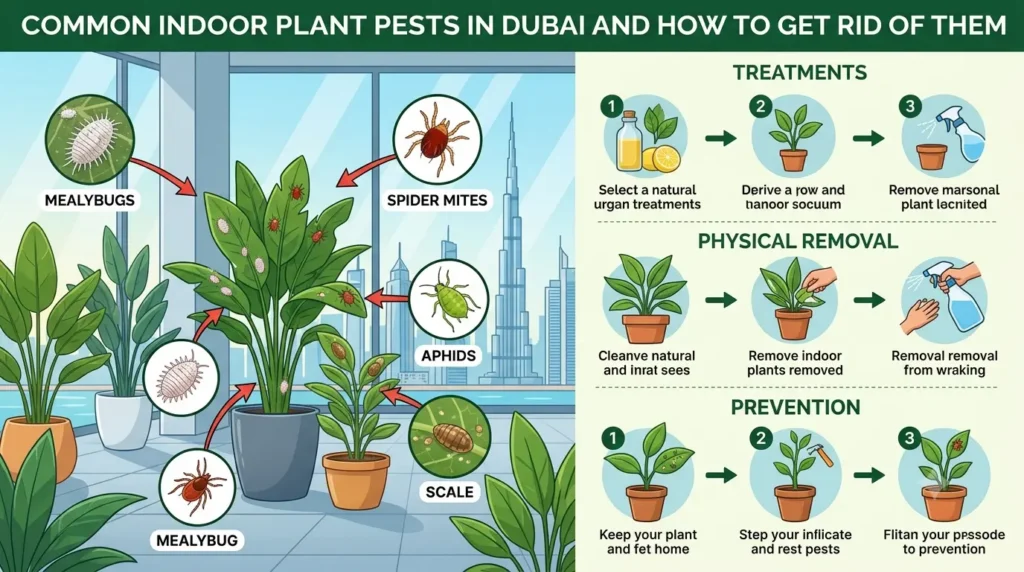
How to Get Rid of Indoor Plant Pests, Step by Step
Follow the same routine for any pest, in this order:
- Isolate the plant: in another room so the pests do not spread.
- Inspect and prune: Remove the most heavily infested leaves and stems and dispose of them properly.
- Wash the plant: under a gentle stream of water to remove as many pests as you can see.
- Spray thoroughly with neem oil or insecticidal soap, lifting leaves to cover the undersides.
- Repeat every five to seven days for three to four weeks; one spray never ends an infestation because eggs keep hatching.
Keep the plant out of direct sun for a few hours after spraying. If you are unsure what you are dealing with, send a photo or bring the plant in. If you are unsure what you are dealing with, send a clear photo to a local plant specialist or nursery for identification and treatment advice.
Preventing Pests in Dubai’s Indoor Climate
Prevention is far easier than a cure. Start by quarantining every new plant for two weeks before it joins your collection; a separate room is enough. Follow an appropriate watering routine for each plant. Keeping soil consistently wet can encourage fungus gnats and contribute to root problems. Raise humidity with a pebble tray or regular misting to discourage spider mites, and give each plant a quick weekly check of leaf undersides. If you already have healthy plants, see the common mistakes when growing indoor plants in the UAE to keep them that way.
A Final Word
You do not need a chemical arsenal to win this fight. Catch the pest early, treat it consistently, and fix the watering and humidity habits that invited it in. And if a plant is badly infested, do not feel guilty about replacing it; sometimes that is the fastest fix. Maya’s World offers a range of indoor plants in Sharjah and can help you choose plants suited to your space and care routine. Looking for healthy indoor plants in Sharjah? Explore the indoor plant collection at Maya’s World or contact our team for help choosing the right plants for your home or office.
Frequently Asked Questions
How do I get rid of bugs in my indoor plants naturally?
Start with isolation, pruning, and a gentle wash, then treat with neem oil or insecticidal soap every five to seven days for three to four weeks. These products can be effective when used correctly, but always check the label and test the product on a small area first because some plants may be sensitive. They work on most common pests.
What are the most common indoor plant pests?
Common indoor plant pests include spider mites, mealybugs, fungus gnats, scale insects, aphids, and whiteflies. Each pest produces different signs and requires a different management approach. Knowing each one’s signs- webbing, cottony clumps, flies in the soil, bumps on stems- tells you which treatment to use.
Why do my indoor plants keep getting pests?
Most repeat infestations come from three habits: skipping quarantine for new plants, overwatering the soil, and leaving stressed plants untreated. Poor watering, unsuitable growing conditions, and other forms of plant stress can make plants more vulnerable to pest problems. Steady care routines like these and a good start with the best indoor plants for beginners prevent most problems.
Are indoor plant pests harmful to people or pets?
Most common indoor plant pests primarily damage plants rather than people. However, some treatments can be harmful if misused, so keep pesticides and other treatments away from children and pets and follow the product label. The main risks are to the plants themselves. Still, keep sprays and treatments out of reach of children and pets, and always follow the label.
