
Is your indoor plant wilting, turning yellow, or developing brown leaves? It could be overwatered or underwatered, and the symptoms can look surprisingly similar. The quickest way to tell the difference is to check the soil, pot weight, and, when necessary, the roots. Proper indoor plant care can help prevent these common problems.
Overwatered indoor plants usually have persistently wet soil and may develop yellow, soft leaves and dark, mushy roots. Underwatered indoor plants usually have very dry soil, crispy or curling leaves, and a noticeably lighter pot. Because both conditions can cause wilting, don’t water a drooping plant until you check the soil first. Before watering, always check the soil moisture to keep your indoor plants healthy. If you’re choosing plants for your home or office, explore our guide to Best Indoor Plants in Dubai to find suitable options for Dubai’s climate.
Quick Diagnosis: Is Your Plant Overwatered or Underwatered?
- Very dry soil + crispy/curling leaves → Possible underwatering
- Wet soil + yellow/soft leaves → Possible overwatering
- Wilting + wet soil → Check drainage and roots
- Wilting + very dry soil → Check for underwatering
- Brown leaf tips → Check watering, humidity, and light
Table of Contents
Why overwatering and underwatering look alike
Clemson University’s watering guide for indoor plants makes the point every plant parent learns the hard way: the symptoms of overwatering and underwatering are similar, and both lead to poor root health, root decline, and possibly death. It also names the real culprit: Overwatering is one of the most common causes of problems in potted plants because roots need both water and oxygen. Roots need both water and oxygen, and waterlogged soil smothers them.
So the leaves alone will not tell you which problem you have. You have to check the soil and the roots, not just the foliage.
Overwatering vs Underwatering: How to Identify and Save Your Plants
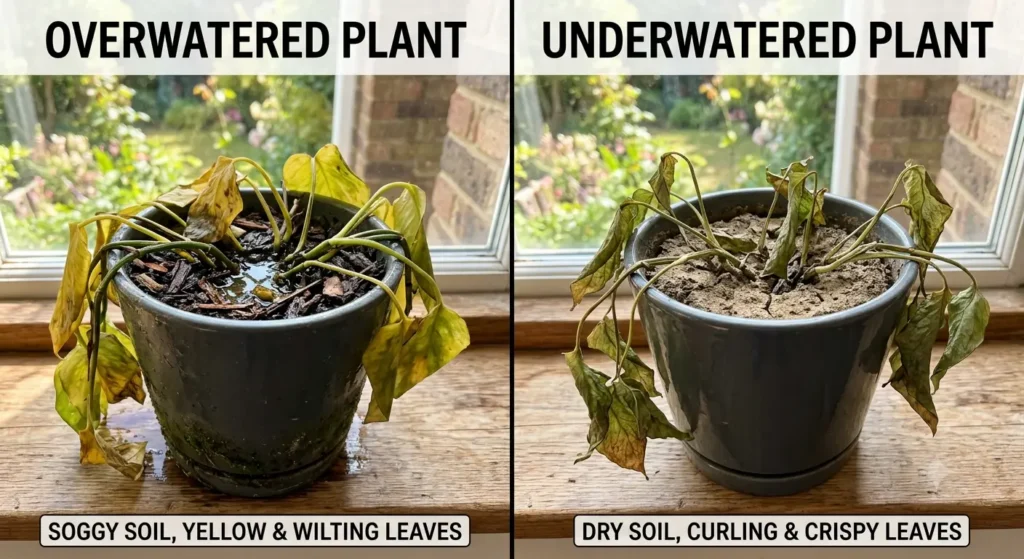
Start with the leaves, but never stop there. This comparison shows what each problem looks like above and below the soil:
| Sign | Overwatered plant | Underwatered plant |
| Leaves | Yellow, soft and mushy; brown spots with a yellow halo | Crispy, curling, dry at the tips; lower leaves drop first |
| Soil | Wet and soggy, sometimes with mould on top or a sour smell | Bone dry and pulled away from the sides of the pot |
| Stem | Soft and squishy near the base | Firm but limp, drooping |
| Roots | Brown, mushy, rotting | Dry, brittle, shrunken |
| Pot weight | Heavy, even days after watering | Light when lifted |
| Wilting | Can happen even when soil is wet | Common when soil is very dry |
When in doubt, tilt the pot and slide the plant out gently. Healthy roots are pale and firm. Anything dark, soft, or foul-smelling means overwatering has already set in.
The finger test and other simple checks
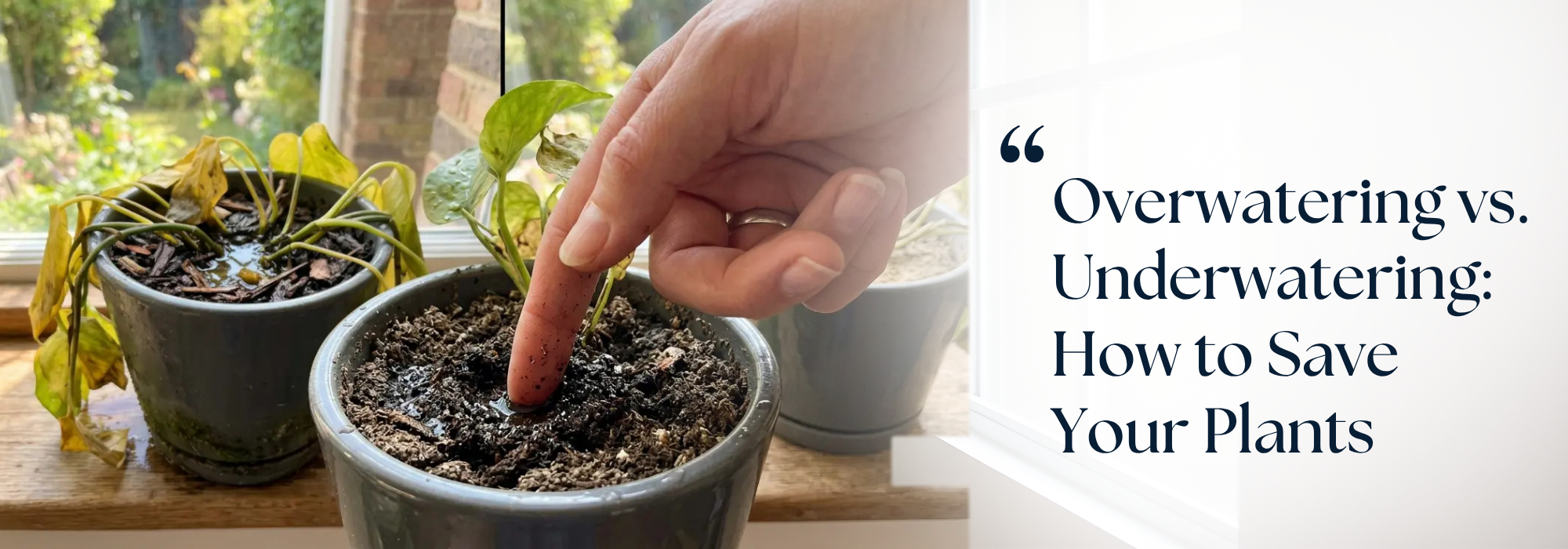
A simple way to check moisture is to insert your finger a few centimetres into the potting mix. If the soil is dry at that depth, check the plant’s specific watering needs before watering. If it is still damp, wait and check again later. Push it into the potting mix up to the first joint: if it feels dry at your fingertip, the plant needs water. If it is damp, wait.
Three more checks from the Clemson guide work without touching the soil:
- Tap the pot. A clay pot that dries out shrinks away from its soil. A hollow sound means the mix is dry; a dull thud means it is still moist.
- Lift the pot. Dry potting mix loses noticeable weight. Get to know how heavy your plant feels after watering, and you will spot the difference.
- Judge the colour. Potting mix turns from dark to light as it dries.
When you do water, water thoroughly until it runs out the bottom, then empty the saucer. Never let the pot sit in water.
How to save an overwatered plant
Overwatering happens fast in a cool, air-conditioned room because the soil stays damp for days. If you caught it early:
- Stop watering temporarily and allow the growing medium to dry to the level appropriate for your particular plant before watering again.
- Move the plant to a brighter spot to speed up drying, but out of harsh afternoon sun.
- Slide the plant out and inspect the roots. Trim away any dark, mushy roots with clean scissors.
- Repot in fresh, well-draining mix if the roots were rotting, and make sure the pot has drainage holes.
- Empty the saucer after every watering from now on.
A snake plant is especially prone to rotting from overwatering; its fleshy leaves store water, so it needs the soil to dry out fully between drinks. If yours has gone soft at the base, act fast. For more problems to watch for, see our list of common mistakes to avoid when growing indoor plants in the UAE.
How to save an underwatered plant
Underwatering can often be corrected if the roots and growing points have not suffered severe damage.
- Give the plant a thorough soak; water until it runs out of the bottom, then wait half an hour and water again. This is the double watering method, and it re-wets soil that has gone hard and dry.
- Or bottom-water: sit the pot in a bowl of water for 20 to 30 minutes until the surface feels moist, then let it drain completely.
- Trim dead, crispy leaves so the plant can put its energy into new growth.
- Keep the soil lightly moist for the next two weeks, then return to a normal schedule.
A recovering plant may gradually regain firmness and begin producing new growth once its moisture, light, and growing conditions are corrected. If you are starting from scratch with watering routines, our complete guide to caring for indoor plants walks through light, soil, and feeding as well.
Why Is My Plant Wilting Even Though I Water It?
Wilting does not always mean your plant needs more water. Both underwatering and overwatering can cause wilting. Check the soil before watering: dry soil points toward water stress, while a plant that is wilting in consistently wet soil may have a drainage or root problem.
Watering in Dubai: air conditioning, summer heat and your garden
Dubai’s indoor environment can affect how quickly plants lose moisture, but air conditioning does not automatically mean a plant needs more frequent watering. A plant exposed directly to an AC draft may dry differently from one kept in a cooler corner. Check the soil before watering and consider the plant type, light, temperature, humidity, and drainage.
The same plant behaves differently in a Dubai garden or balcony: summer heat and direct sun pull water out of the soil quickly, and outdoor plants may need watering daily. The heat-tolerant plants for Dubai homes can cope with that, but they still need a drink when the top of the soil dries out.
A few climate-specific rules:
- Check the soil before watering rather than following a fixed schedule.
- Keep plants away from direct AC airflow where possible.
- Adjust watering according to plant type, light, pot size, soil mix, and room conditions.
- During Dubai’s hotter periods, monitor soil moisture more frequently rather than automatically watering more often.
The short version: test the soil first
Whether your plant is drowning or parched, overwatering vs. underwatering: how to identify and save your plants comes down to one habit: test the soil before you water. Touch it, lift the pot, look at the roots. That single routine saves more plants than any schedule ever will, and it works whether you keep a single snake plant on a shelf or a whole indoor garden in your home in Dubai.
Whether you bought your indoor plants in Sharjah or anywhere else in the UAE, the same rule applies to every indoor plant you keep at home. Start today: before you water anything, push your finger into the soil. If it is still damp, put the watering can down. This simple check can help prevent both overwatering and underwatering.
Frequently asked questions
How do I tell if my plant is overwatered or underwatered?
Check the soil moisture first. Persistently wet soil with soft or yellowing foliage can indicate overwatering, while very dry soil with crispy or curling leaves points toward underwatering. Check the roots if the diagnosis is still unclear.
Can overwatering cause a plant to wilt?
Yes. Overwatering can damage roots and interfere with normal water uptake, so a plant may wilt even when its soil is wet.
How do you save an overwatered plant?
Stop watering temporarily, check the drainage, inspect the roots if symptoms are severe, remove rotten roots where appropriate, and repot into suitable well-draining growing media if necessary.
How do you revive an underwatered plant?
Check how dry the soil is and water thoroughly if the plant’s care requirements call for it. Allow excess water to drain fully, then monitor the soil moisture and adjust your watering routine.
Why are my plant leaves turning yellow?
Yellow leaves can have several causes, including overwatering, underwatering, poor light, nutrient problems, or natural ageing. Check the soil and growing conditions before assuming water is the cause. RHS also notes that yellow leaves can have multiple causes.
How often should I water indoor plants in Dubai?
There is no universal watering schedule. Check the soil moisture and consider the plant species, pot size, soil mix, light, temperature, and air-conditioning conditions before watering.
