
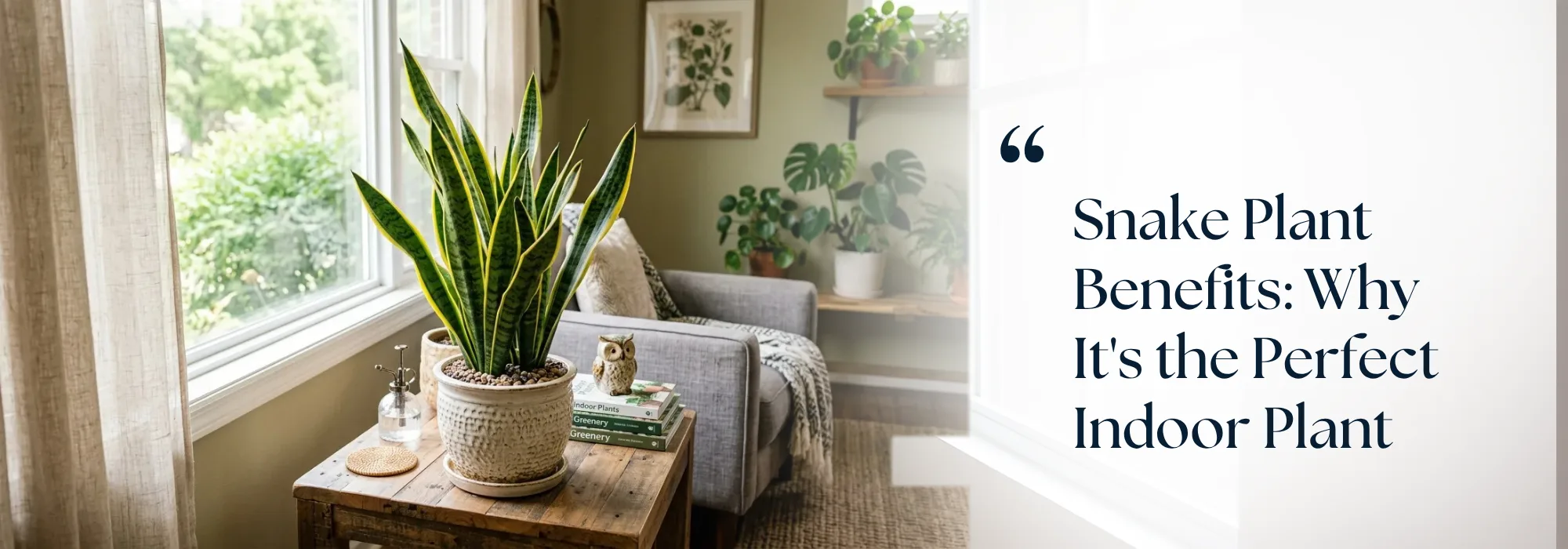
Snake plant benefits are practical, not just pretty. This upright, sword-leaved plant purifies indoor air, survives low light, and forgives owners who forget to water it. That is why it is one of the best indoor plants in Dubai and a firm favourite in our plant shop for indoor plants in Sharjah. Whether you are a first-time plant parent or a seasoned collector, the snake plant is the one houseplant that rarely disappoints.
Why the Snake Plant Belongs in Every Dubai Home
The snake plant (Sansevieria trifasciata), also known as mother-in-law’s tongue, stores water in its thick, fleshy leaves and rhizome roots. That built-in reservoir is what lets it shrug off missed waterings and the dry, air-conditioned air of most UAE homes. A well-known NASA clean-air study listed it among the plants that help remove indoor pollutants such as formaldehyde and benzene. Better still, most plants release oxygen only during the day; the snake plant also releases it at night, which makes it a natural bedroom companion and Best Plants for Dubai Weather: Heat-Tolerant Plants for Homes.
It is also one of the toughest houseplants you can buy. Pests rarely bother it; it grows slowly enough to stay neat for years, and it asks for almost nothing in return. For anyone new to keeping plants or anyone whose schedule keeps them away from home that combination is hard to beat.
Snake Plant Benefits for Low-Light Rooms
Many homes in the UAE have rooms that never see direct sun: hallways, guest bathrooms, home offices, and shaded corners of the living room. Flowering plants struggle in those spots, but the snake plant grows happily a few metres from a window. Its tall, striped leaves add structure and height without demanding bright light. If you are searching for low-light indoor plants that still look sharp, this is the one to start with.
That tolerance makes it a workhorse for interior design in apartments and villas alike. Place one beside the entryway, on a console table, or in a bedroom corner, and it quietly works with any style from minimal and modern to warm and boho.
How to Care for a Snake Plant in an Air-Conditioned Home
Dubai homes run air conditioning for most of the year, and the cool, dry air shocks many tropical plants. The snake plant tolerates it well, provided you follow a few simple rules:
- Water sparingly: Let the soil dry out completely between waterings, every two to three weeks in summer and once a month in winter. Overwatering is the leading cause of death for potted plants, according to Clemson University’s Home & Garden Information Center.
- Use well-draining soil: A cactus or succulent mix works best, and a pot with a drainage hole is non-negotiable.
- Wipe the leaves: Every few weeks to keep them dust-free and able to absorb light efficiently.
- Keep it warm: It is happiest between 18–30°C, a range that covers almost every UAE home.
- Fertilise lightly. A diluted cactus fertiliser once or twice during the growing season is plenty; too much food does more harm than good.
The plant also survives outdoors in a Dubai garden if you place it in a shaded corner and protect it from heavy rain. Along with other heat-tolerant plants for homes, it handles the UAE climate far better than most houseplants.
Snake Plant in Home Decor and Interior Design
The snake plant is a decorator’s favourite because its clean, sculptural lines fit modern home decor trends. It looks sharp in ceramic pots, woven baskets, and tall planters, and it fills empty corners without taking over a room. A single tall specimen makes a statement beside a sofa; a cluster of smaller ones in matching pots dresses up a shelf or window ledge.
For more styling ideas, see how we decorate your home with indoor plants across every room. If you are new to houseplants, our guide to the best indoor plants for beginners is a good starting point, and our complete indoor plant care guide covers watering, light, and feeding in detail. Our essential indoor plant care tips for every season also help you adjust your routine as the UAE weather shifts.
Snake Plant vs. Flowering Plants: What to Choose
Flowering plants such as peace lilies, anthuriums, and orchids bring welcome colour, but they need brighter light, more water, and steadier attention. The snake plant gives you greenery with none of the fuss: no pruning, no deadheading, no dropped petals to sweep up.
A balanced approach works best: use flowering plants in your brightest rooms, and let snake plants handle the low-light, high-traffic areas. You get colour where the light is good and structure where it is not, so every room looks intentional rather than bare.
A Low-Maintenance Plant That Earns Its Place
Few indoor plants deliver as much for as little as the snake plant does. It cleans the air, tolerates low light and air conditioning, and forgives the occasional forgotten watering, all while looking sharp in nearly any room. That balance is exactly what the snake plant’s benefits come down to: real, useful resilience rather than a fussy showpiece.
Ready to add one to your home? Browse our indoor plants UAE collection at Maya’s World Plants & Flowers UAE, or visit us in Sharjah for advice on the right pot and placement for your space.
FAQs
- Is the snake plant safe for pets?
No. It is mildly toxic to cats and dogs if chewed, so keep it on a shelf or in a room your pets cannot reach.
- Does the snake plant really purify the air?
It helps remove some common indoor pollutants and releases oxygen at night. No single plant replaces proper ventilation, but a few snake plants are a sensible, low-cost addition to any room.
- Why are my snake plant leaves turning yellow?
That is usually a sign of overwatering. Let the soil dry out completely, then water less often. Remove any soft, rotten leaves at the base.
- How often should I repot a snake plant?
Every two to three years, or when roots push through the drainage holes. It actually grows better when slightly root-bound, so resist the urge to move it too often.
- Can a snake plant grow outdoors in Dubai?
Yes, in a shaded or partly shaded corner of a Dubai garden. Bring it indoors during extreme summer heat or heavy rain, and use a free-draining mix so the roots never sit in water.
