
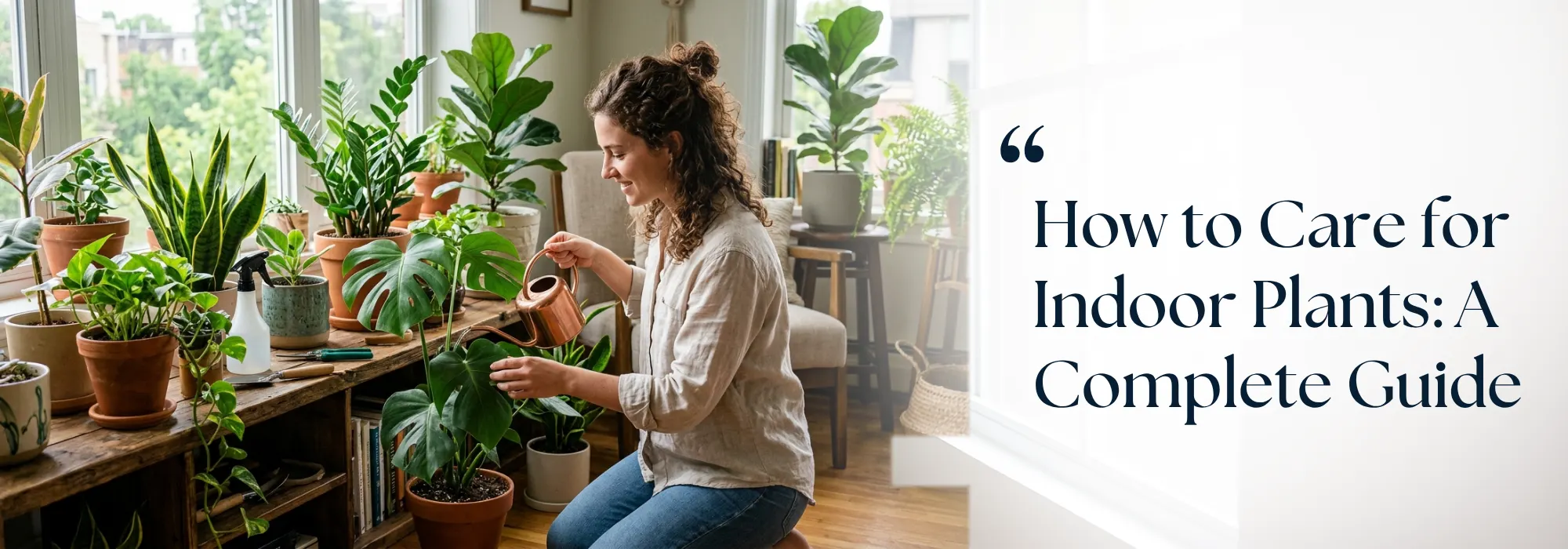
These indoor plants offer a range of benefits. They can make hidden things visible and clear the air of toxins while bringing an element of nature into the environment. However, many new plant owners find themselves in need of guidance on how to water, illuminate, or arrange their plants correctly. This How to Care for Indoor Plants: Beginner’s Guide will introduce individuals to the essentials of properly caring for houseplants and ease them into becoming successful plant owners. So, if you just bought the Indoor plant UAE collection or want to know the best indoor plants in Dubai, here’s how to help your little indoor garden with the basic plant care tools. If this is all new to you, our guide to indoor plants for beginners has some strong contenders to start with.
Plant care can be easy; just be aware of the basic needs of each plant. This ranges from watering schedules to light and humidity conditions, making sure your plants thrive through the long haul. This guide has your indoor house plants sale all year round.
Why Indoor Plant Care Matters
For example, healthy indoor plants contribute to more than aesthetics.
They can:
- Improve indoor aesthetics
- Help create a relaxing atmosphere
- Increase humidity indoors
- Reduce stress
- They will lead you to be more in touch with nature.
Indoor plants are a good thing for your home and office, as they can live for years if you take care of them well.
Understanding Your Plant’s Needs
Every plant has unique requirements. Before bringing a new plant home, learn about its preferred:
- Light conditions
- Watering schedule
- Humidity level
- Temperature range
- Soil type
- Growth habit
Understanding these basics helps prevent many common plant care problems.
Opt for the Right Spot
Location is one of the most important factors in indoor plant care.
Consider:
- Natural sunlight
- Air circulation
- Room temperature
- Distance from air conditioners
- Humidity levels
Do not allow your plants to sit in an area where they will be subject to sudden shifts in temperature, like near a draft or where cold air from the AC will come out.
How to Water Houseplants Well
The natural impulse to do enough to keep indoor plants alive without overwatering harms most of the houseplants; overwatering is the number 1 problem. Check the soil first, and don’t water on a schedule.
Simple watering tips are:
- Wait until the topsoil is dry before watering.
- Water very well until water drains out of the bottom.
- Never leave pots standing in water.
- Reduce watering during cooler months.
Some plants will require more or less water than others, and always consider the specific needs of each variety.
Pick plants that work well indoors
According to Their Watering Needs
- Snake Plant
Surely, one of the easiest houseplants to care for is the Snake plant. The foliage retains plenty of water, and everyone enjoys extremely dry dirt on watering days. Watering is the major error that anyone without a coach makes, since most beginners think they must continually water plants to keep them alive.
- Spider Plant
It’s best to water this plant when the soil feels dry to the touch. There is normally no watering or soaking of them, but kept a little damp. You can mist spider plants occasionally if the environment is especially dry. These plants do not need watering regularly.
- Peace lily
The soil should neither be too dry nor too wet; ensure the soil does not dry up completely but should require some watering. When the plant is short on water, the leaves will droop, but it should not be kept in water as well.
Understanding Light Requirements
Light is also critical to good growth.
Indoor plants fall under three different types:
- Bright Indirect Light
Ideal for:
- Peace lily
- Monstera
- Philodendron
- Rubber plant
These plants enjoy bright rooms but should not receive intense afternoon sunlight directly.
- Medium Light
Plants that tolerate medium light include:
- Spider plant
- Dracaena
- Chinese evergreen
These adapt well to most indoor living spaces.
- Low Light
Some plants perform well even in areas with limited sunlight.
Examples include:
- Snake plant
- ZZ plant
- Cast iron plant
Although these plants tolerate low light, they still benefit from occasional indirect sunlight.
Use Well-Draining Soil
Healthy roots require proper drainage. Choose potting mixes designed specifically for indoor plants.
A good mix should:
- Drain excess water easily
- Retain enough moisture
- Allow airflow around roots
- Prevent compaction
Always use pots with drainage holes to avoid water accumulation at the bottom.
Opt for the Right Pot
Your pot should suit both the plant and its growth stage.
Consider:
- Drainage holes
- Appropriate size
- Durable material
- Stability
It is important to repot your plants, but do not repot them unless the roots bunch up or seem to be growing through the holes in the bottom of pots.
Humidity plays an essential role in keeping the indoor plants healthy, especially in an air-conditioned home & office, as the air gets dried out. The majority of tropical houseplants like average to high humidity.
Humidity can be increased by
- Watering with Verbal Water
- Keep a humidifier on the side.
- Remove the tray with water.
- Plant grouping.
The moisture-loving Peace lily and the dry-loving Snake plant will suit your home. Keep Indoor Temperatures Steady. Most indoor plants prefer temperatures between 18C and 27C.
Avoid placing plants near:
- Air conditioner vents
- Heaters
- Kitchen stoves
- Frequently opened exterior doors
Morning frost can rob plants of growth since it stresses them out due to sudden temperature changes.
Fertilize for Healthy Growth
At the same time, like in living organisms that require fertilizer-like substances, an application of which will stimulate growth processes in leaves and roots to feed ground plants. However, the Best Indoor Plants for Beginners within this class will require a feeding subscription at different periods. Spring and summer are the best time to feed houseplants that are actively growing.
Here are some things you will be taught about fertilising houseplants:
- Every 4-6 weeks during periods of active growth.
- Reduce fertilizing plants, especially in cold seasons.
- Do not apply fertilizer to leaves that are too dry.
Since excess fertilizer burns roots and causes damage to leaves, make sure you stick to the recommended ratio so you will not over-fertilize your plant.
Clean the Leaves Routinely
Dust on the leaves of houseplants builds up over time, which keeps them from absorbing enough sunlight.
To do this:
Especially if you have small plants, spray them a little. Also cut the dead leaves as well as yellowish shoots, so your plant will look beautiful. Cleaning leaves off houseplants is not only attractive, but it can also help keep the air clean.
Prune when necessary
Cutting back houseplants keeps them looking nice and helps them grow.
Trim:
- Dead leaves
- Yellow leaves
- Damaged stems
- Overgrown branches
- Faded flowers
Always use clean, sharp pruning tools to reduce the risk of spreading diseases.
Watch for Common Pests
Even healthy indoor plants can occasionally attract pests.
Some of the most common are:
- Aphids
- Spider mites
- Mealybugs
- Fungus gnats
- Scale insects
You should check your plants and the underside of the leaves. If you find that one of your plants is being eaten by bugs, you need to isolate the plant from the other plants and then spray the plant with insecticidal soap or neem oil before the bugs do more damage to the plant.
Turn Your Plants Over
Your plants will grow towards the light, so you have to turn the pots every week or every two weeks. This way, your plants will grow equally. Will not lean to one side. Doing this thing will make sure your indoor plants are balanced, and they look beautiful.
Repot When Needed
When plants mature, they might escape their containers.
Signs that repotting is needed:
- Roots growing through drainage holes
- Water draining too quickly
- Slower growth
- Root-bound soil
Choose a new pot that is larger than your current plant because large pots retain too much moisture.
Seasonal Plant Care
The care of indoor plants varies by season.
- Spring and Summer
- Water more frequently.
- Fertilize regularly.
- Expect active growth.
- Report if necessary.
- Autumn and Winter
- Reduce watering.
- Pause or reduce fertilizing.
- Protect plants from cold drafts.
- Continue monitoring light levels.
Adjusting your care routine according to the season helps plants remain healthy year-round.
Common Indoor Plant Care Mistakes
Many beginners unintentionally harm their plants by making a few common mistakes.
Avoid these issues:
- Overwatering
- Using pots without drainage holes
- Placing plants in incorrect lighting
- Ignoring pest problems
- Overfertilizing
- Frequently moving plants
- Allowing dust to build up on leaves
Understanding these mistakes can prevent many common plant health problems.
Opting for the Right Plants
If you’re new to plant care, start with varieties that are naturally easy to maintain.
Excellent beginner-friendly choices include:
- Snake plant
- Spider plant
- ZZ plant
- Pothos
- Rubber plant
Need more recommendations? Read our guide to Best Indoor Plants for Beginners, featuring low-effort plants that suit different homes and lifestyles. Homeowners should also consider the sunlight available in their house, door plants in indoor temperature, and even maintenance before selecting plants as part of an indoor plant UAE collection or the best indoor plants in Dubai.
Conclusion
Before we jump into this, it is important to note that Learning How to Care for Indoor Plants: The complete guide begins with how. Correct watering, appropriate lighting, good draining soil, suitable maintenance of foliage, and remedial feeding are all contributors to durable indoor plants. From hardy to a Snake plant, the graceful Peace lily, as well as fast-growing Spider plant, consistent care keeps you with healthier foliage as well as stronger growth.
Be it growing your indoor plant UAE collection further or even hunting for the best indoor plants in Dubai, a few simple steps in taking care are all you need to ensure your indoor garden flourishes. Given proper care and the time it needs, indoor plants can turn your home into a lush, green, healthy paradise that may last for years to come
FAQ
How often should I water indoor plants?
The watering frequency depends on the plant type, pot size, and indoor environment. Most indoor plants should be watered when the top 1–2 inches of soil feel dry.
What is the best soil for indoor plants?
A well-draining potting mix is ideal for most indoor plants. Different plant varieties, such as succulents or orchids, may require specialized soil mixes.
How often should I fertilize indoor plants?
Most indoor plants benefit from fertilizing once every 4–6 weeks during the growing season (spring and summer). Reduce or stop fertilizing during winter.
Why are the leaves on my indoor plant turning yellow?
Yellow leaves can result from overwatering, underwatering, poor drainage, insufficient light, nutrient deficiencies, or natural aging.
Can indoor plants survive in air-conditioned rooms?
Yes. Many indoor plants adapt well to air-conditioned environments, but they may need extra humidity and should be kept away from direct cold air.


